In today’s recycling industry, processing efficiency isn’t just a competitive advantage — it’s a necessity. While material volumes increase and waste streams become more complex, recycling plants must move more material, recover higher-quality commodities, and operate with tighter margins than ever before.
Improving processing efficiency means maximizing material flow while minimizing waste, labor demands, and energy consumption. From increasing throughput and reducing bottlenecks to lowering energy costs and improving the purity of recovered materials, the right operational strategies and equipment choices can dramatically impact a facility’s performance and profitability.
Common Operational Challenges That Limit Recycling Plant Efficiency
Inconsistent Recycling Inputs
Recycling plants process highly variable inputs — from single-stream municipal waste to commercial and industrial materials. Fluctuations in size, density, moisture content, and contamination levels make it difficult to maintain consistent throughput and sorting accuracy.
Equipment bottlenecks
When one component in the system (such as a screen, shredder, or sorter) cannot keep up with upstream volume, it slows the entire line. Screening equipment that becomes clogged or overwhelmed by fines can significantly reduce efficiency and increase recirculation loads.
Contamination and Material Purity
Excess fines, organics, or improperly sorted materials reduce the quality of recovered commodities. Poor separation early in the process leads to downstream inefficiencies, increased labor, and lower bale value.
Downtime and Maintenance
Wear and tear on screens, conveyors, and shredders is inevitable, especially in abrasive environments. Frequent maintenance, unexpected breakdowns, and difficult-to-access components all reduce operational uptime and productivity.
Energy Consumption
Inefficient systems often require higher motor loads, excessive reprocessing, or redundant material handling, which increases energy costs and operational expenses.
Scalability and Future-Proofing
As volumes grow or regulations change, older systems may not adapt easily. Plants that lack flexible, modular equipment can face costly retrofits or performance limitations.
Key Equipment Options That Boost Recycling Plant Efficiency
Improving processing efficiency often comes down to selecting the right equipment for each stage of the recycling process – from initial material handling to final sorting and screening.
Advanced Conveying and Sorting Systems
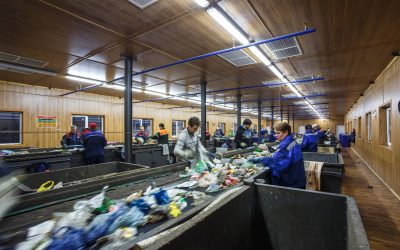
Automated sorting technologies — including optical sorters, magnetic separators, and air classifiers — help identify and separate materials at high speeds with greater precision than manual sorting alone.
These systems offer several key advantages. Automation can significantly increase sorting accuracy while reducing the amount of manual labor required on the line. This not only improves efficiency but can also enhance worker safety and consistency in material recovery.
However, facilities should consider the upfront investment and operational requirements when implementing automated systems.
High-Performance Shredders and Crushers
This equipment helps create consistent particle sizes, which allows downstream equipment to operate more effectively.
Modern shredders are designed to handle a wide range of materials while minimizing clogging and equipment downtime. Improved cutting systems, torque control, and feed mechanisms help maintain steady throughput even when materials vary in density or composition. By producing more uniform material output, shredders can help stabilize the entire processing line and improve recovery rates.
Screening Equipment
When screens efficiently separate materials into consistent size fractions, downstream equipment (such as sorters, crushers, or additional separators) can operate at optimal efficiency.
Selecting the right screening technology for the material stream and operating conditions can significantly improve overall plant performance and help facilities achieve more consistent results.
How the BIVITEC and Freedom Disc Screen Improve Processing Efficiency in Recycling Plants
BIVITEC®: High-Capacity, Self-Cleaning Screening
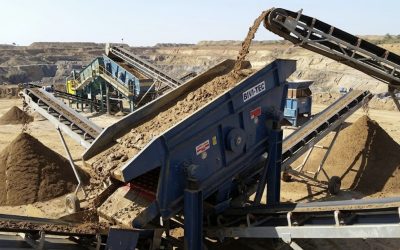
The BIVITEC® vibrating screen is designed for challenging applications where high throughput and consistent sizing are essential. Its unique dual vibration pattern keeps the screen surface free of blinding and clogging. This means recycling plants can process mixed waste streams with less manual intervention and fewer stoppages.
The BIVITEC’s motion also reduces wear and tear on equipment, extending component life and lowering maintenance costs. By delivering reliable separation even with difficult feed materials, this equipment helps plants maintain smoother material flow and higher overall productivity.
Freedom Disc Screen: Precise, Efficient Separation
The Freedom’s rotating disc design efficiently separates material based on size, ensuring that undersized and oversized fractions are diverted appropriately without the need for frequent manual correction. This not only improves the quality of output but also reduces the amount of recirculated material that must be processed again, saving time and energy.
Because it handles heavy, contaminated, and mixed waste streams with minimal plugging or blinding, the Freedom Disc Screen keeps throughput high and downstream equipment running optimally.
If you have any questions or would like to request a demo, please reach out to AEI Screens today.